Buy trade-social.com ?
We are moving the project
trade-social.com .
Are you interested in purchasing the domain
trade-social.com ?
domain@kv-gmbh.de · 0541-91531010
Buy trade-social.com ?
Are photons electrons?
No, photons are not electrons. Photons are elementary particles that make up light and electromagnetic radiation, while electrons are negatively charged subatomic particles that are part of atoms. Photons have no mass and travel at the speed of light, while electrons have mass and are bound to the nucleus of an atom. **
How are photons created?
Photons are created through a process called electromagnetic radiation. This occurs when an atom absorbs energy, causing its electrons to move to a higher energy level. When the electrons return to their original energy level, they release the absorbed energy in the form of photons. This process can happen in various ways, such as through thermal radiation, chemical reactions, or nuclear reactions. **

Similar search terms for Photons
Top-Angebote
Products related to Photons:
-
Macoesa Eucaliptus Exchange 50Gr 50 grNutrition and Supplements Natural Extracts Macoesa Eucaliptus Exchange 50Gr 50 gr Eucalyptus Herbofarma Used part : Leaves. How to use : Infusion, orally. Put in a container the indicated quantity of plant; add boiling water and let it rest for a few minutes. 2 g / 200 ml, 2-3 times a day. Presentation : Bag 50 gr2,48 £*Shipping: 3,99 £Secure redirect to the provider




-
What happens to photons?
Photons are elementary particles that make up light. They do not have mass and travel at the speed of light. When photons interact with matter, they can be absorbed, reflected, or transmitted. Absorption of photons can result in the excitation of electrons, leading to various physical and chemical processes. **
-
How can one convert the energy of different photons into monochromatic photons?
One way to convert the energy of different photons into monochromatic photons is through a process called frequency doubling or second harmonic generation. This involves passing the photons through a nonlinear crystal, which causes the photons to combine and create new photons with double the frequency and half the wavelength of the original photons. This results in monochromatic photons with a single, specific wavelength. Another method is through the use of filters or monochromators, which can selectively filter out photons of specific wavelengths, allowing only monochromatic photons to pass through. **
-
How far do photons travel?
Photons, as particles of light, travel at the speed of light in a vacuum, which is approximately 299,792 kilometers per second. This means that photons can travel vast distances in a very short amount of time. However, their travel distance can be affected by factors such as absorption, reflection, and scattering, which can cause them to be absorbed or redirected before reaching their destination. **
-
What distinguishes photons and protons?
Photons are elementary particles that carry electromagnetic radiation, such as light, while protons are subatomic particles found in the nucleus of an atom. Photons have no mass and travel at the speed of light, while protons have mass and are composed of quarks. Additionally, photons do not have an electric charge, while protons have a positive electric charge. **


Why can photons penetrate matter?
Photons can penetrate matter because they do not have an electric charge and are not affected by electromagnetic forces within the material. Additionally, photons do not have mass, allowing them to travel at the speed of light and pass through matter without being absorbed or deflected. This property of photons enables them to interact with atoms and molecules in the material, leading to phenomena such as absorption, reflection, and transmission. **
What are photons made of?
Photons are elementary particles, which means they are not made up of smaller components. They are the basic unit of light and electromagnetic radiation, and they have no mass and no electric charge. Photons are considered to be the force carriers for the electromagnetic force, and they exhibit both wave-like and particle-like properties. In quantum mechanics, photons are described as excitations of the electromagnetic field. **
Top-Angebote
Products related to Photons:
-
Our Voices: Neighborhood & Community Boxed SetFoster a feeling of belonging while building key reading skills with these colorful storybooks that spotlight a variety of neighborhoods and communities. The 10 charming stories feature characters from different cultural backgrounds who learn about...32,37 $*Shipping: 0,00 $Secure redirect to the provider
-
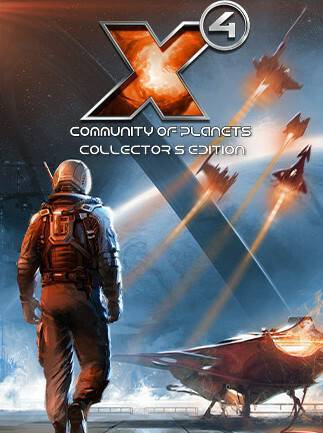
X4: Community of Planets Edition PC Steam CD Key GlobalX4: Community of Planets Edition is an expansive space simulation game developed by Egosoft. Released in 2024, it is part of the X4 series and includes several expansions and new content. Key Features: Expansive Universe : The game reunites all known species of the X4 Universe, offering a rich and diverse environment to explore. Multiple Expansions : It includes content from previous expansions such as Split Vendetta , Cradle of Humanity , Tides of Avarice , and Kingdom End , as well as the new 2024 expansion Timelines. Collector’s Edition Bonuses : The Collector’s Edition offers exclusive content like the Yasur light fighter ship, a unique paintmod, and additional in-game items. Art and Literature : The Collector’s Edition also includes an artbook with concept art from the game’s expansions and novels like Farnham’s Legend and Nopileos. Gameplay: Players can engage in various activities such as trading, building, and combat. The game emphasizes player freedom, allowing you to shape your own path in the vast universe.16,27 £*Shipping: 0,00 £Secure redirect to the provider
-
Macoesa Eucaliptus Exchange 50Gr 50 grNutrition and Supplements Natural Extracts Macoesa Eucaliptus Exchange 50Gr 50 gr Eucalyptus Herbofarma Used part : Leaves. How to use : Infusion, orally. Put in a container the indicated quantity of plant; add boiling water and let it rest for a few minutes. 2 g / 200 ml, 2-3 times a day. Presentation : Bag 50 gr2,48 £*Shipping: 3,99 £Secure redirect to the provider
-
Are photons electrons?
No, photons are not electrons. Photons are elementary particles that make up light and electromagnetic radiation, while electrons are negatively charged subatomic particles that are part of atoms. Photons have no mass and travel at the speed of light, while electrons have mass and are bound to the nucleus of an atom. **
-
How are photons created?
Photons are created through a process called electromagnetic radiation. This occurs when an atom absorbs energy, causing its electrons to move to a higher energy level. When the electrons return to their original energy level, they release the absorbed energy in the form of photons. This process can happen in various ways, such as through thermal radiation, chemical reactions, or nuclear reactions. **
-
What happens to photons?
Photons are elementary particles that make up light. They do not have mass and travel at the speed of light. When photons interact with matter, they can be absorbed, reflected, or transmitted. Absorption of photons can result in the excitation of electrons, leading to various physical and chemical processes. **
-
How can one convert the energy of different photons into monochromatic photons?
One way to convert the energy of different photons into monochromatic photons is through a process called frequency doubling or second harmonic generation. This involves passing the photons through a nonlinear crystal, which causes the photons to combine and create new photons with double the frequency and half the wavelength of the original photons. This results in monochromatic photons with a single, specific wavelength. Another method is through the use of filters or monochromators, which can selectively filter out photons of specific wavelengths, allowing only monochromatic photons to pass through. **
Similar search terms for Photons
-
York Wallcoverings Exchange Crystal Shore WallpaperExchange's small, unique, fractured lines feel like an artisanal installation rendered in burnished metallic against a textural plaster ground, shown in taupe grey with burnished metallic..170,00 $*Shipping: 0,00 $Secure redirect to the provider
-
How far do photons travel?
Photons, as particles of light, travel at the speed of light in a vacuum, which is approximately 299,792 kilometers per second. This means that photons can travel vast distances in a very short amount of time. However, their travel distance can be affected by factors such as absorption, reflection, and scattering, which can cause them to be absorbed or redirected before reaching their destination. **
-
What distinguishes photons and protons?
Photons are elementary particles that carry electromagnetic radiation, such as light, while protons are subatomic particles found in the nucleus of an atom. Photons have no mass and travel at the speed of light, while protons have mass and are composed of quarks. Additionally, photons do not have an electric charge, while protons have a positive electric charge. **
-
Why can photons penetrate matter?
Photons can penetrate matter because they do not have an electric charge and are not affected by electromagnetic forces within the material. Additionally, photons do not have mass, allowing them to travel at the speed of light and pass through matter without being absorbed or deflected. This property of photons enables them to interact with atoms and molecules in the material, leading to phenomena such as absorption, reflection, and transmission. **
-
What are photons made of?
Photons are elementary particles, which means they are not made up of smaller components. They are the basic unit of light and electromagnetic radiation, and they have no mass and no electric charge. Photons are considered to be the force carriers for the electromagnetic force, and they exhibit both wave-like and particle-like properties. In quantum mechanics, photons are described as excitations of the electromagnetic field. **
* All prices are inclusive of VAT and, if applicable, plus shipping costs. The offer information is based on the details provided by the respective shop and is updated through automated processes. Real-time updates do not occur, so deviations can occur in individual cases. ** Note: Parts of this content were created by AI.